Specialist tree services
Hazardous tree removal
Controlled removals for dead, declining or unwanted trees, with careful planning around homes, roads and other trees.
Hazardous tree removal
Start with the tree and the setting.
A removal plan begins with the tree’s condition and what surrounds it. SkyView’s brochure identifies hazardous tree removal as a specialty, with an emphasis on reducing the impact on property and nearby plants. A tree over a roof, between buildings or beside a road deserves a conversation about access and a controlled approach before anyone starts work.
Tell us whether the tree is dead, declining, damaged or simply no longer wanted in that location. Describe any recent changes and what lies under the canopy. Your observations help us understand the request; they do not replace an assessment of the tree and work area.
The estimate should identify the tree or trees involved, the proposed scope, equipment access and the intended finish. If you would like to retain a healthy tree, say so. Removal and preservation are different goals, and the discussion should begin with the result you want.
Working around homes, roads and limited space
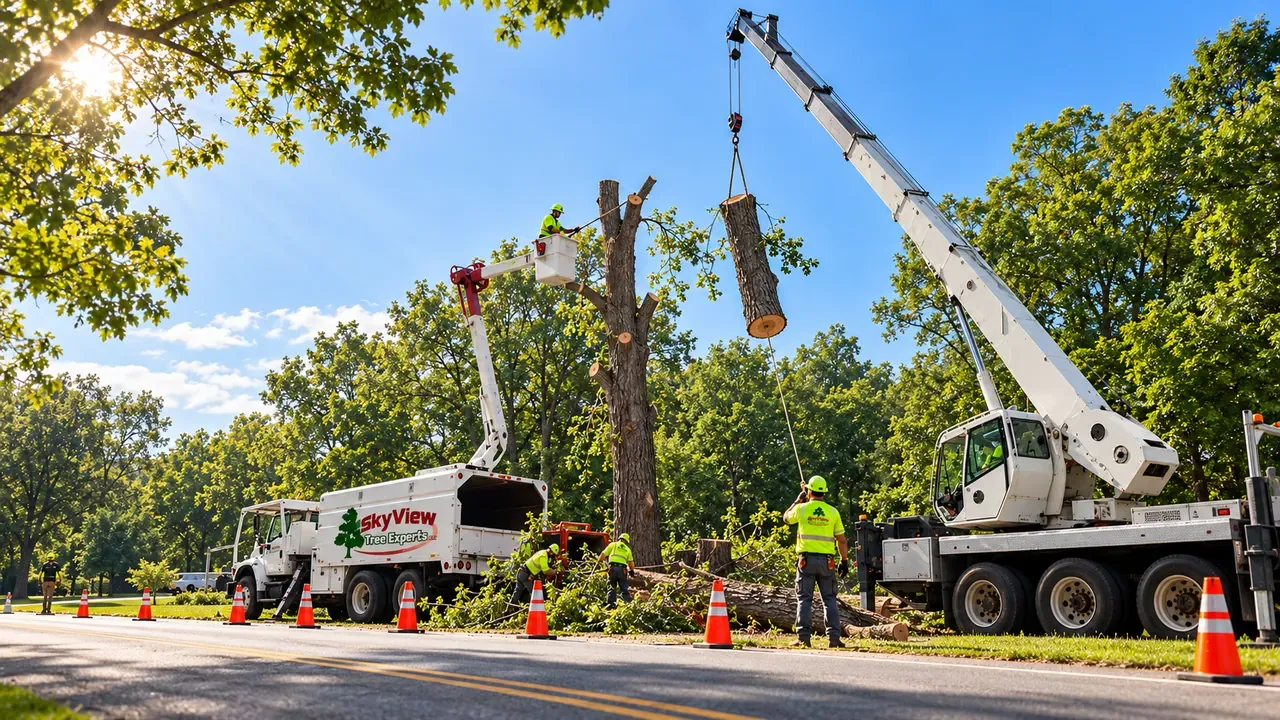
A narrow driveway, fence, garden, slope or nearby building can influence how a job is organized. Mention gates, overhead restrictions and surfaces that must remain accessible. Equipment options, rigging and any crane coordination are considered for the specific site; an illustration or previous project does not establish the method for your tree.
Ask where the working area will be and what you should move before the scheduled work. Vehicles, outdoor furniture, play equipment and pets may need to be kept outside that area. Confirm these preparations with SkyView rather than moving closer to a damaged tree to collect measurements.
A complete discussion also separates removal from the finish afterward. Cut wood, branches, brush, the remaining stump and restoration are distinct items. Tell us if you want usable wood left on the property, debris taken away or stump work considered. The agreed scope should make these choices clear.
Bring these questions to the estimate.
- Which tree is included, and what is the main concern?
- What equipment access and working space would be needed?
- Which nearby structures, plants or surfaces need attention?
- How will wood, branches and brush be handled?
- Is stump work included, excluded or quoted separately?
Include the complete address and your preferred contact number. A request is the start of a conversation, not a booked visit. If the concern is urgent, call to discuss availability; immediate danger belongs with emergency services or the utility as appropriate.
Hazardous tree removal questions
Can you remove a tree close to a house?
Close proximity is an important planning issue. Send the address and describe the tree’s position relative to the house, driveway and other obstacles. SkyView will discuss the site and proposed approach before confirming the job.
Does every removal require a crane?
No single method fits every property. Tree condition, access and nearby obstacles affect the discussion. Ask whether rigging, equipment access or crane coordination is part of the proposed scope.
Can the stump stay in place?
State the finish you prefer. A removal estimate and stump-service estimate may cover different work, so confirm what will remain and what will be addressed.
Can a photo determine the price?
A photo can help explain a request, but it may not show condition, scale or access well enough to establish a complete scope. Pricing and assessment needs are confirmed for the individual property.
Put this service in context.
Compare all tree services, read the tree-care and estimate guide, or browse supplied project footage. Ask about related work so removal, pruning, debris handling and stump service are not left as assumptions.
Request a free estimate